
90% adoption, 6% impact: reading the 2026 surveys
Surveys put AI use in dealmaking anywhere from 21% to 96%. We set 11 studies from 2025 and 2026 side by side and show what each one actually asked.
Read →Fifty sources on AI in deal teams, read at the publisher's page and set side by side: who was asked, what was measured, and what a small firm can conclude.

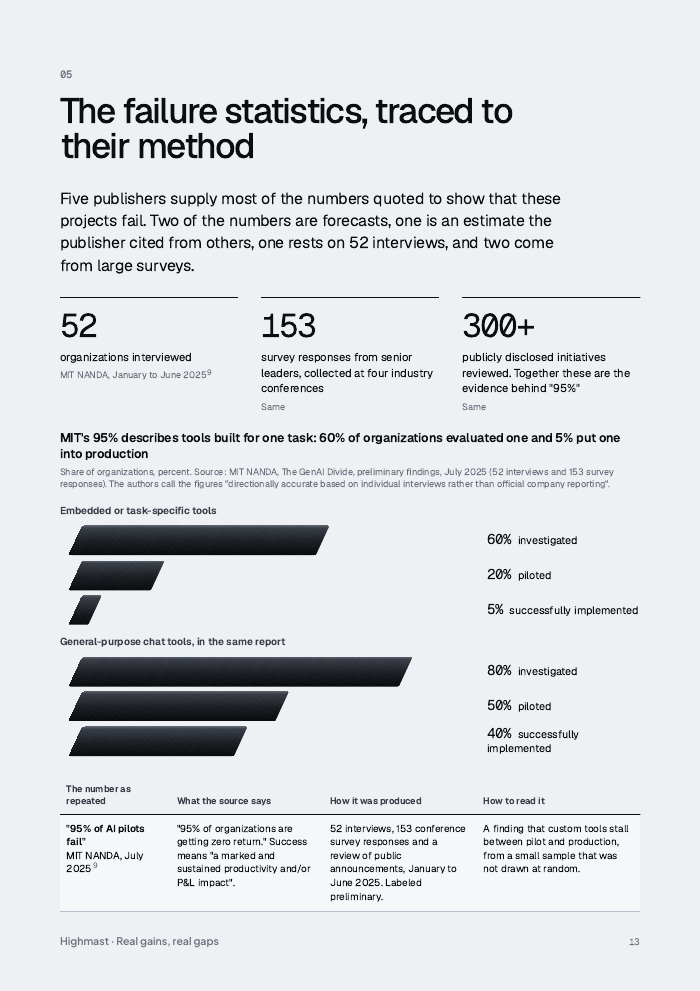
A partner who reads that 90% of dealmakers use AI and that 95% of AI projects fail has been handed two numbers that cannot both mean what they seem to. The first includes firms that are only experimenting.1 The second rests on 52 interviews and 153 survey responses.2
This report reads the sources. It takes 50 surveys, studies and forecasts, most of them from 2025 and 2026, and sets them side by side: who was asked, how many answered, what the question was, and what came back. The share of dealmakers using AI runs from 21% to 96% depending on the verb in the question.34 Two-thirds of deal professionals put the time saved in due diligence between 11% and 30%, by their own estimate.5 In the one study that timed the work, software developers who took 19% longer believed they had been 20% faster, and its authors revised the result in February 2026.67
Every figure was read at the publisher's own page or document. Where a site refused access we read the Internet Archive's copy and say so in the source list. Most of the surveys were published by firms that sell software or advice, and most respondents work at large firms.
No survey reports results for deal firms of 10 to 60 people, and nobody publishes the hours a deal job takes. The report says what a small firm can conclude anyway and what it should not. The numbers check covers how to review a machine-drafted document once you are using one.
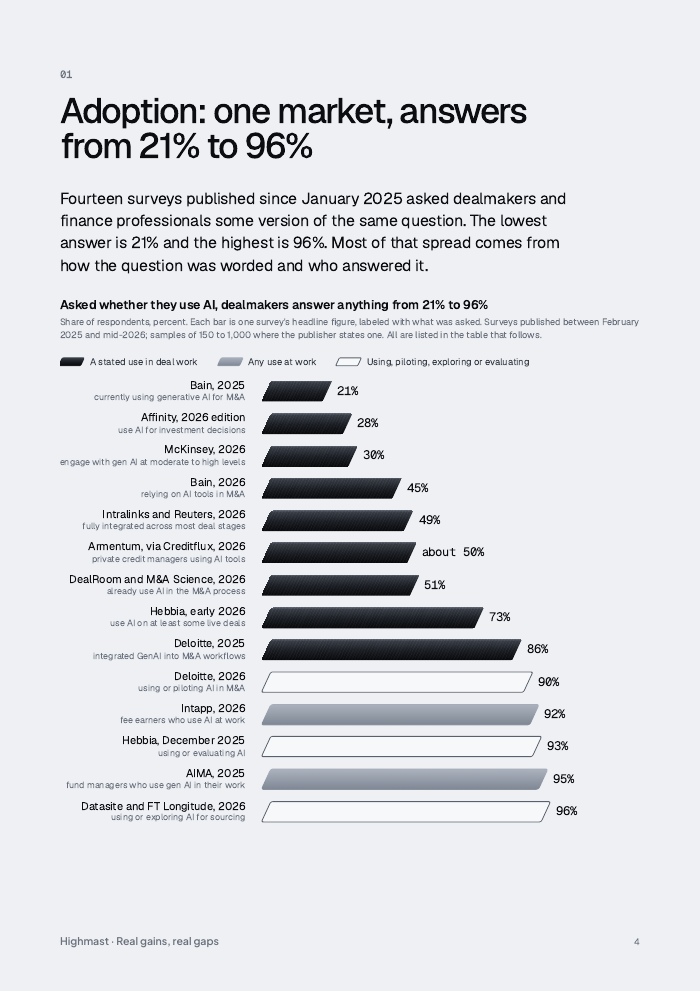
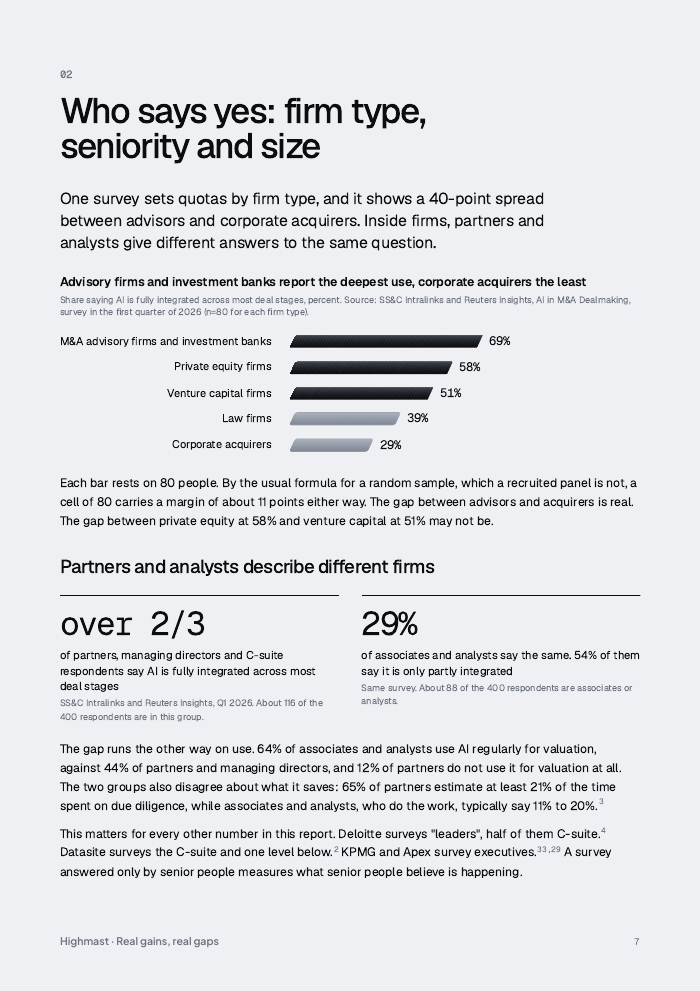
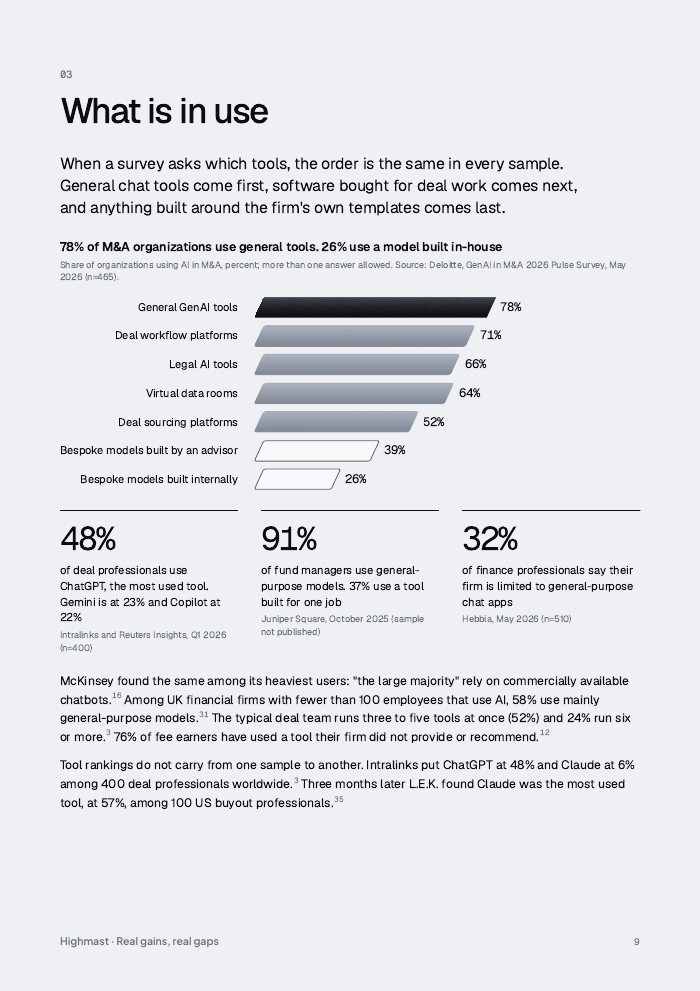
It depends on the question. Surveys published in 2025 and 2026 put the share between 21% and 96%. Asked whether AI is fully integrated across most deal stages, 49% of the 400 deal professionals Intralinks surveyed said yes. Among associates and analysts in the same survey, 29% did.
That figure comes from an MIT report based on 52 interviews, 153 survey responses and a review of public announcements, and it describes custom tools that stall before production. The best-measured figure is from S&P Global: 42% of companies abandoned most of their AI initiatives before production, in a survey of 1,006 people fielded in late 2024.
No. None of the 26 surveys we compared reports results for deal firms of that size, and none publishes the hours a deal job takes. The report says what a small firm can and cannot conclude from the rest.
Of the 26 in our table, 22 come from firms that sell software, data or advice to this market. The report says so wherever it changes how a number should be read.
Yes. Pass it on inside your firm.
Surveys put AI use in dealmaking anywhere from 21% to 96%. We set 11 studies from 2025 and 2026 side by side and show what each one actually asked.
Read →
MIT's 95%, Gartner's 30% and RAND's 80% are quoted as facts. What each one measured, the better-measured figures, and why projects stall in deal work.
Read →
Most boutique banks cannot say how many more mandates the current team could run. The sourced inputs, the missing one, and the arithmetic on one page.
Read →How many more deals the same team could carry, worked out from your own hours.
Which heavy job to systemise first, ranked from four questions about each.
A sell-side mandate in seven stages: sourced durations, failure rates, an hours worksheet.